🌿 Cutting Through It: The Tools That Handle Woody Growth
Disclosure: This post contains affiliate links. If you purchase through these links, I may earn a commission at no additional cost to you.
A few days ago we talked through the thinking behind shrub pruning — reading bloom times, starting with the Three D’s, and thinning rather than shearing. Today we’re getting into the tools that make the physical work easier, cleaner, and less damaging to your plants.
Because here’s the thing: the wrong tool doesn’t just make the job harder, it makes it worse. Crushing a stem instead of cutting it cleanly leaves the plant vulnerable to disease and slows recovery. The right tool, matched to the right branch size, makes a clean cut that heals quickly. I have large paver style planter boxes surrounding 3 sides of my pool. Each is lined with Hydrangeas (which I talk about in another post). The corners of the planters have trees in them. I have both Crepe Mertls and Red Bloodgood Maples. Each spring it’s necessary to trim back the maples a bit to remove the dead wood. The Crepe Mertls are cut back in late winter / early spring before there is a chance for new growth to come in. Plants handle the trimming better when they are dormant.
Matching Tool to Branch Diameter
Here are a few simple rules of thumb on knowing which tool to use for the job in order to cause the least damage to the plant with fewer downstream side effects:
- Hand pruners — stems up to about ¾ inch. This would be most of your flowering perennials such as Hydrangeas and Forsythias.
- Loppers — stems from ¾ inch to about 1½ inches. Currently my Crepe Mertls and Japanese Maples fall into the category.
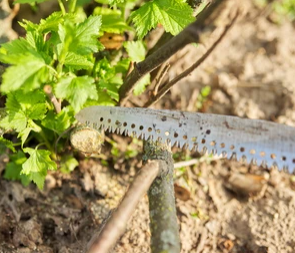
- Pruning saw — anything thicker than 1½ inches, or dense tangled growth where a lopper can’t get proper leverage. This is where more substantial trees and mature shrubs come into play.
Most gardeners are well-stocked on pruners. Every spring when I see these in the gardening store I feel compelled to pick up a brand new pair, however, many people skip on the next two. That’s where the real work happens.
🌿 Tool Spotlight – Compound Action Loppers
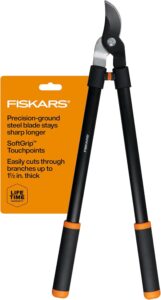
As branches thicken, smaller tools lose effectiveness — and putting extra force behind a bad tool is where injuries happen.
A quality set of compound action loppers multiplies your cutting force through the head mechanism, so you’re working with the tool rather than fighting it. The result is a clean, deliberate cut on stems that would otherwise require repeated hacking or give your wrists a beating.
What to look for:
- Compound or gear-driven action for mechanical advantage on thick stems
- Bypass blades (not anvil) for cleaner cuts on live wood
- Comfortable, non-slip grips — you’ll be squeezing repeatedly
Why I love this tool 👉 It allows you to work with intention, even on heavier growth.
When a Lopper Still Isn’t Enough
Some situations call for more. A large cane that’s grown woody over several seasons, a branch that’s angled awkwardly in the interior of a dense shrub, or a stem that’s simply too thick for clean lopper pressure — these are the moments that define whether the job gets done well or just gets done.
Common Mistakes – Using pruners on branches too thick, not cleaning between plant cuts (spreads disease), wrong cut angle, forcing an oversized cut with the wrong tool risks tearing the bark, splitting the stem, or leaving a ragged wound that won’t callus cleanly. It’s also just harder than it needs to be.
Maintaining your Cutting Tools
Since the tools are mainly made out of high quality metal, they should be wiped down periodically during use and then washed with soap and water afterwards to eliminate any chances of cross contamination. At minimum metal tools should be oiled at the start and end of each season to protect them from corrosion and rust.
A Complete Pruning Kit
For most home gardeners working on established shrubs, these three tools cover the full range:
- Bypass hand pruners — for fine work and smaller stems
- Compound action loppers — for mid-range woody growth
- Folding pruning saw — for everything else
Keep them clean, keep the blades sharp, and wipe them down with rubbing alcohol between plants to avoid spreading disease. A tool that’s maintained lasts decades. Another note, make sure you keep all your tools in a relatively dry place. Humidity and dampness will cause them to rust which adds unnecessary additional expenses each year. My favorite tool to reach for is the pruners because I love flowering perennials the most, but taking off some dead branches feels like cleaning out an old closet