🪣 Heavy-Duty Garden Waste Bins (Focus: Disposal)
Disclosure: This post contains affiliate links. If you purchase through these links, I may earn a commission at no additional cost to you.
Efficiency in gardening is often a matter of logistics. How quickly and cleanly can you move debris from the bed to the compost pile?
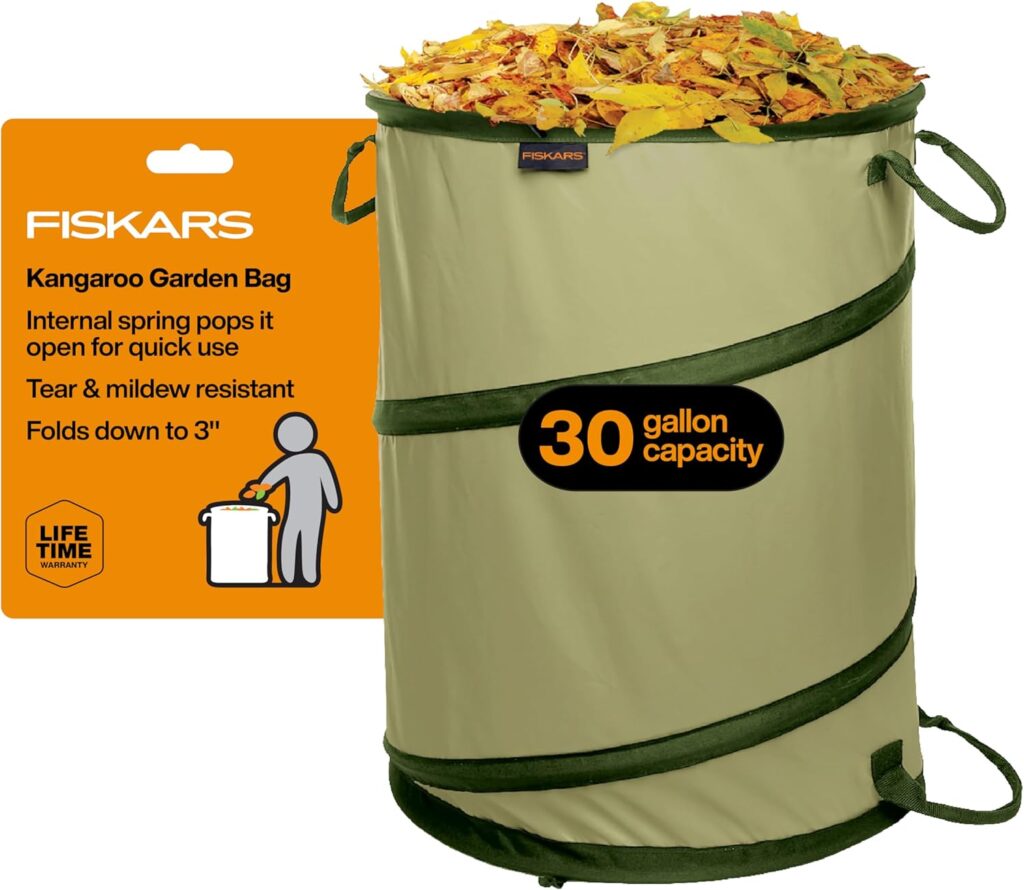
- Self-Standing Design: Unlike standard plastic bags that collapse, the internal spring-loaded design of the Kangaroo bag stays open and upright, allowing you to focus on the extraction rather than wrestling with your waste container.
- Professional Durability: The tear-resistant and mildew-resistant construction ensures this bin survives the “wet” season of April cleanup and folds down to a mere three inches for a clutter-free executive shed.
- Volume Optimized: The 30-gallon capacity is the “sweet spot” for managing a standard residential bed in a single trip, maintaining your momentum and keeping your workflow seamless.
Phase 1 removal is all about moving volume. You need a bin that doesn’t collapse under the weight of wet spring debris. The Tool: Fiskars Kangaroo Collapsible Spring up Graden bags are excellent. You can line them with large black trash bags that the spring support will keep the bag upright while you fill it.
🌿 TOOL SPOTLIGHT – Heavy-Duty Garden Waste Bin (Fiskars Kangaroo)
When it comes to spring cleanup, efficiency is less about speed and more about flow—how easily you can move from clearing to disposal without interruption.
A self-standing garden bin changes that rhythm entirely. Instead of collapsing under wet debris like standard bags, it stays open and stable, allowing you to work continuously without stopping to adjust or reposition.
The durability matters here too. In early spring conditions, where everything is damp and heavy, a bin like this holds its structure and keeps the process smooth from bed to compost.
🪣 It’s not just about holding debris—it keeps your workflow uninterrupted.
Removing Remnant Annuals
Any annuals left from the previous autumn—zinnia stalks, dried marigolds, or spent vines—should be pulled entirely, roots and all. Unlike perennials, these will not return, and their decaying root systems can become tangled with the new plants you intend to put down later this month.
Step 2: Strategic Sanitation
As you clear, you are doing more than cleaning; you are performing a “garden audit.” This is the best time of the year to see exactly what happened over the winter.
- Inspect for Pests: Slugs, snails, and various beetle larvae seek shelter under damp debris. As you clear the beds, you disrupt these habitats and expose pests to natural predators like birds.
- Identify Winter Damage: Did the weight of the snow break a branch on your favorite hydrangea? Is a stone border starting to crumble? Without the “clutter” of last year’s growth, these issues become visible, allowing you to fix them before they are hidden by summer foliage.
Step 3: Preparing for the “Art of the Cut”
While we will dive deep into pruning techniques in our next post, the “Clean Slate” phase involves removing the obvious deadwood. If a stem snaps easily and shows no green inside, it is likely ready to be removed.
However, a word of caution for the eager gardener: be careful not to “scalp” the earth. You want to clear the debris around your plants without disturbing the delicate “crown” where new green shoots are just beginning to emerge. These cowhide gloves are great for protecting you hands.
🌿 TOOL SPOTLIGHT – Cowhide Leather Thorn Proof & Puncture Resistant Gardening Gloves

As the cleanup shifts from clearing to handling, protecting your hands becomes just as important as the tools you use.
A glove with grip and insulation gives you better control while handling debris, pulling roots, or working near emerging growth. These are great when repotting roses.
However, when I am weeding or planning in wet soil I do prefer water proof gloves and these Cooljob ones work quite well.
🌿 TOOL SPOTLIGHT – Waterproof Garden Gloves (COOLJOB)

In early spring, when the soil is wet and unforgiving, waterproof gloves make a noticeable difference. They allow you to work directly in damp conditions without constantly stopping or dealing with discomfort.
🧤 It’s a small upgrade, but one that makes longer sessions much more manageable.
The Zen of the Spring Cleanup
We often rush through the cleanup because we are anxious to get to the “pretty” part of gardening—the planting. But there is a profound sense of peace to be found in this manual labor.
| 🌿 Sage Note: I try to pick a cool day after we had a good rain shower to do the weeding. I find it’s much easier if the soil is very wet and mushy. Much easier to pull the full weed out from the root. |
Cleaning the beds is a physical transition from the dormancy of winter to the activity of spring. It clears the mental clutter as much as the physical debris. When you finish, and you stand back to look at those dark, clean stretches of earth, you aren’t just looking at dirt—you’re looking at a canvas.